Discover the Top 12 Dog Sports to Enjoy & Bond with Your Canine Companion
Unleash the Fun – And the Bond!
For many, a dog is more than a pet; it’s a family member, a confidant, and a constant source of joy. As owners, we’re always seeking new ways to enrich their lives and deepen our connection. While daily walks and games of fetch are essential, dog sports open up a new world of shared activity, communication, and achievement. Engaging in a sport together moves beyond simple exercise; it becomes a language you and your dog learn to speak, strengthening your bond with every command, leap, and success. Many of the sports also allow our dogs to have a positive outlet for their natural instincts, in a safe way.
More Than Just Exercise: The Deeper Benefits of Dog Sports for You and Your Canine Companion
Dog sports are a powerful combination of physical activity, mental stimulation, and targeted dog training. They provide a structured outlet for a dog’s natural instincts—whether it’s chasing, sniffing, or problem-solving. This focused engagement helps reduce boredom-related behaviors, builds confidence, and creates a well-rounded, happy canine. For the owner, it’s an opportunity to understand their dog’s capabilities and communicate on a more profound level.
What You’ll Discover in This Guide: Exploring the World of Canine Athletics for Enjoyment and Connection
This guide will introduce you to 12 of the most popular and accessible dog sports. We’ll explore activities suited for every type of dog and owner, from high-energy athletes to thoughtful sniffers. Whether your goal is friendly competition or simply a new weekend hobby, you’ll find a sport that celebrates your unique partnership and brings you closer together.
Why Engage in Dog Sports? Benefits for Both Ends of the Leash
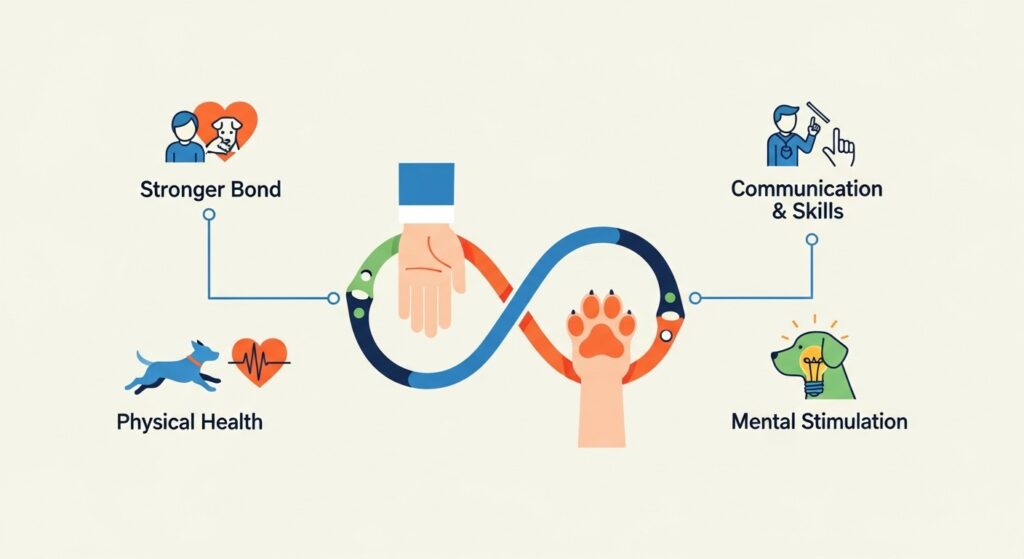
Engaging in dog sports offers a wide range of benefits for both the dog and the owner, enhancing physical health, mental sharpness, and the deep bond of teamwork.
Participating in dog sports offers a wealth of benefits that extend far beyond the playing field. It’s a holistic activity that nurtures the physical, mental, and emotional well-being of both the dog and the handler, reflecting a growing trend where demand for specialized services like agility and advanced obedience now comprises roughly 25% of new training program bookings.
Physical Health and Mental Stimulation for Your Canine: Keeping Them Active and Engaged
Most dogs were originally bred for a specific job. Dog sports provide a modern-day purpose, channeling their energy constructively. The physical demands help maintain a healthy weight and improve cardiovascular fitness, while the mental challenges of learning new skills and solving problems keep their minds sharp, preventing cognitive decline and reducing anxiety. Scent games are increasingly being used in Taipei to keep dogs engaged at home when the weather is too hot or too wet to exercise them sufficiently.
Strengthening the Human-Canine Bond Through Shared Experiences and Teamwork
At its core, every dog sport is a team activity. Success depends on clear communication, mutual trust, and a deep understanding between you and your dog. Working together toward a common goal, celebrating small victories, and navigating challenges builds a partnership that transcends the typical owner-pet dynamic. You become a true team.
Building Confidence and Social Skills in Your Dog
For a shy or timid dog, mastering a new skill in a positive environment can be transformative. Successfully navigating an agility course or finding a hidden scent builds immense self-assurance. Furthermore, attending training courses and events provides controlled exposure to other dogs and people, enhancing your dog’s social skills in a structured setting.
Finding Your Community: Connecting with Other Dog Lovers and Training Facilities
The world of dog sports is filled with passionate, like-minded individuals. Joining a local club or taking classes connects you with a supportive community that shares your love for dogs. These connections provide valuable resources, friendship, and a shared space to celebrate your canine companion’s achievements. This should never be overlooked, living in a big city can be isolating, and having dogs can make introductions easier and you already have a common interest.
The Joy of Shared Accomplishment: Enhancing the Owner’s Fulfillment and Enjoyment
Watching your dog joyfully execute a command you’ve practiced for weeks is incredibly rewarding. Whether you earn a ribbon in an obedience trial or simply perfect a trick in your backyard, these moments of shared accomplishment provide a profound sense of pride and fulfillment for the owner. It can also make the owners see their dog in a new light, its easy to be impressed by a dog on TikTok and assume its a ‘special’ dog, when the reality is its just a dog that the owners trained, it often is quite easy.
Choosing Your Adventure: Finding the Perfect Sport for You and Your Dog
Selecting the right sport is crucial for long-term enjoyment. The best fit depends on a combination of your dog’s natural abilities, your personal goals, and your shared lifestyle.
Considering Your Dog’s Physical Abilities and Age: From Energetic Puppies to Wise Seniors
A young, high-energy Australian Shepherd might thrive in agility, whereas a senior Basset Hound may be a natural at Scent Work. Consider your dog’s breed traits, size, health, and age. Low-impact sports like Rally or Scent Work are excellent for older dogs, while high-impact activities like dock diving are better suited for young, athletic canines in their prime. Always consult a veterinarian before starting a new high-intensity sport.
Evaluating Your Own Lifestyle, Goals, and Time Commitment: Competitive Dreams vs. Pure Fun
Be realistic about your own availability and interests. Are you looking for a casual weekend activity or are you aiming to compete at a national level? Some sports require more intensive training and equipment than others. Choose an activity that aligns with the time and resources you can comfortably commit.
Balancing Competition with Pure Fun and Bonding: Addressing the “Not the Competitive Type?” Angle
You don’t have to be competitive to enjoy dog sports. Many organizations offer non-competitive titling programs or “just for fun” classes. The primary goal for most participants is not winning ribbons but strengthening their bond and having a great time with their dog. The thrill is in the journey of learning together.
Table of Contents
The Top 12 Dog Sports to Enjoy & Bond With Your Canine Companion
Here’s a look at 12 exciting sports that offer unique ways to play, train, and connect with your dog.
Agility
Agility involves guiding your dog off-leash through a timed obstacle course featuring jumps, tunnels, weave poles, and A-frames. It’s a thrilling test of speed, coordination, and handler communication. The popularity of this sport is undeniable; in 2022 alone, agility competitions saw an increase of 25% in participation.
- Best For: High-energy, intelligent, and responsive dogs.
- First Steps: Start with basic agility training by teaching your dog to go through a play tunnel or jump over a low bar in your backyard.
This is definitely the most well known sport and also one that people often feel is beyond their dog, or they have the wrong breed for it. So whilst its true some dogs are better naturally at this than others, its still a fact that all dogs can enjoy it.
Rally Obedience
Rally, or rally obedience, is a more relaxed version of a traditional obedience trial. You and your dog navigate a course of designated signs, each with instructions for a specific obedience skill (like “sit-down-sit”).
- Best For: Dogs of all ages and breeds with a foundation in basic obedience.
- First Steps: Perfect basic commands like sit, stay, and heel. Enthusiastic communication and encouragement are allowed and encouraged during a run.
Scent Work (Nose Work)
This sport harnesses a dog’s most powerful natural ability: its sense of smell. In Scent Work, dogs are trained to find specific target odors (like birch or clove) hidden in various environments and alert their handler.
- Best For: Any dog with a nose! It’s fantastic for building confidence in shy dogs and providing a low-impact activity for seniors.
- First Steps: Play “find it” games by hiding a favorite treat under one of three cups and encouraging your dog to find the correct one.
Dock Diving (Dock Jumping)
The ultimate sport for water-loving canines. In dock diving, dogs run down a dock and leap into a pool of water, competing for the greatest distance or height. It’s an exciting, crowd-pleasing spectacle.
- Best For: Athletic, water-confident dogs with a strong retrieving drive.
- First Steps: Cultivate a love for water and retrieving. Start by tossing a floating toy a short distance into the water from a beach or shoreline.
Flyball
Flyball is a fast-paced relay race for teams of four dogs. Each dog runs over a series of hurdles, triggers a spring-loaded box that releases a tennis ball, catches the ball, and races back over the hurdles to their handler.
- Best For: High-energy, ball-obsessed dogs who get along well with other canines.
- First Steps: Solidify a reliable “fetch” and “come” command. Introduce your dog to single, low jumps.
Disc Dog (Canine Frisbee)
Disc dog involves a handler throwing flying discs for their dog to catch. Competitions range from simple distance catches to complex, choreographed freestyle routines with impressive acrobatic leaps.
- Best For: Agile dogs with a natural retrieving instinct and a love for jumping.
- First Steps: Use soft, dog-safe flying discs to avoid mouth injuries. Start with short, low “rollers” on the ground to build interest before moving to air throws.
Canine Freestyle (Musical Canine Freestyle / Heelwork to Music)
Often described as “dancing with your dog,” Canine Freestyle combines tricks, obedience, and heelwork into a choreographed routine set to music. It’s a beautiful display of creativity and teamwork.
- Best For: Dogs of any breed who enjoy learning tricks and working closely with their handler.
- First Steps: Build a strong foundation of tricks and obedience cues. Start linking two or three known behaviors together in a simple sequence.
Fast CAT (Coursing Ability Test)
Fast CAT is a straightforward test of a dog’s natural prey drive and speed. Dogs chase a lure down a 100-yard-long, straight, and fenced course. Their time is converted into miles per hour.
- Best For: Any dog that loves to run and chase, regardless of breed.
- First Steps: No specific training is required, but a strong recall is helpful for after the run. The instinct to chase is all they need.
Barn Hunt
This sport taps into the historic role of many terriers and other breeds in hunting vermin. Dogs search for rats (safely enclosed in aerated tubes) hidden within a maze of hay bales.
- Best For: Dogs with a keen sense of smell and a natural hunting instinct, especially terriers.
- First Steps: Encourage your dog’s natural sniffing behaviors. Many facilities offer “introduction to the rat” workshops.
Canine Hoopers
Hoopers is a low-impact and flowing alternative to agility. Dogs navigate a course made of hoops, barrels, and tunnels. Because there are no high-impact jumps, it’s accessible to dogs of all ages, sizes, and abilities.
- Best For: Dogs of any age, including puppies just starting out and seniors who need a gentler activity.
- First Steps: Teach your dog to run through a simple hoop using treats and praise as encouragement.
Dog Parkour
Also known as urban agility, parkour involves training a dog to interact with and navigate obstacles in their everyday environment, such as jumping onto a park bench or weaving through bike racks, with a focus on safety and control.
- Best For: Confident, physically fit dogs and handlers who enjoy creative problem-solving.
- First Steps: Start small by teaching your dog to put “two paws on” a stable, low object like a curb or a large book.
Trick Training for Fun
While not always a formal competitive sport, trick training is a fantastic way to engage your dog’s mind and strengthen your bond. Organizations like the American Kennel Club (AKC) offer titling programs where you can earn recognition for your dog’s skills.
- Best For: All dogs and owners. It’s endlessly adaptable to any skill level.
- First Steps: Choose a simple trick like “shake” or “spin.” Use positive reinforcement and keep sessions short and fun.
Beyond the Competition: Enjoying Dog Sports Purely for Connection
The true value of dog sports lies not in the ribbons but in the shared experience. The journey of learning, practicing, and playing together is where the deepest bonds are forged.
The Value of Play-Based Training and Informal Engagement: Focus on the Fun, Not the Scores
Approach your chosen sport as a structured game. Celebrate effort over perfection. If your dog misses a weave pole or drops a disc, laugh it off and try again. When the pressure to perform is removed, both you and your dog can relax, learn more effectively, and truly enjoy your time together.
Integrating Sports into Daily Life for Continuous Bonding: Making Every Walk an Opportunity
You don’t need a formal agility course to practice your skills. Use a walk in the park as a chance to work on parkour by having your dog hop onto a sturdy bench. Play scent games in your living room. Practice heelwork on your way to the 7-11. Every shared moment is an opportunity to reinforce your training and strengthen your connection.